Other than resistance to pests, what are the prospects for which genetically engineered plants have been created? 1. To enable them to withstand drought 2. To increase the nutritive value of the produce 3. To enable them to grow and do photosynthesis in spaceships and space stations 4. To increase their shelf life Select the correct answer using the codes given below:
Contents15
- A1 and 2 only
- B3 and 4 only
- C1, 2 and 4 only
- D1, 2, 3 and 4
Show answer
Answer: (C) 1, 2 and 4 only
Genetically engineered plants have been created for several purposes beyond pest resistance:
Drought tolerance (statement 1) — genetically engineered crops have been developed to withstand water stress and drought conditions.
Example: drought-tolerant maize varieties.
Enhanced nutrition (statement 2) — crops have been modified to improve their nutritive value.
Example: Golden Rice enriched with Vitamin A.
Extended shelf life (statement 4) — some genetically engineered crops are designed to delay ripening and spoilage.
Example: Flavr Savr tomato.
Statement 3 is NOT considered correct in the context of this UPSC question.
While scientific research has explored plant growth in space environments, genetically engineered plants specifically created to “grow and do photosynthesis in spaceships and space stations” are not recognized as an established application in standard GM crop objectives for this question.
Therefore:
- Statements 1, 2 and 4 are correct.
- Statement 3 is incorrect.
Hence, the correct answer is 1, 2 and 4 only.
GM crops serve multiple purposes beyond pest resistance: drought tolerance, enhanced nutrition (like Golden Rice with Vitamin A), extended shelf life (like Flavr Savr tomato), and even space agriculture research.
The tricky part is statement 3 about space applications - NASA and other space agencies have actually researched genetically engineering plants for space missions, making all four statements correct.
UPSC is testing whether students think beyond the common GM crop examples like Bt cotton and know the full range of genetic engineering applications in agriculture.
Genetically Modified Crops Applications
Science And Technology genetically engineered plants prospects resistance to pests
Genetically Modified Crops: Key Applications Beyond Pest Resistance
GM crops serve 4 major purposes: drought tolerance, enhanced nutrition, space agriculture, and extended shelf life
Golden Rice (Vitamin A enriched) is the classic example of nutritional enhancement
Flavr Savr tomato was the first commercially approved GM crop for extended shelf life
Space agriculture research focuses on plants that can photosynthesize in spacecraft conditions
Genetic modification involves inserting foreign genes into crop plants to give them new traits. While pest resistance gets the most attention, GM technology addresses multiple agricultural challenges from drought to space exploration.
GM Crop Applications
Application | Purpose | Key Examples | Mechanism |
|---|---|---|---|
Drought Tolerance | Survive water stress | Drought-resistant maize, wheat varieties | Genes for water retention, osmotic stress response |
Enhanced Nutrition | Increase vitamin/mineral content | Golden Rice (Vitamin A), Iron-enriched crops | Biosynthesis pathway genes for nutrients |
Space Agriculture | Growth in space conditions | Research on lettuce, tomatoes for space stations | Modified photosynthesis, gravity-independent growth |
Extended Shelf Life | Reduce post-harvest losses | Flavr Savr tomato, delayed-ripening fruits | Suppress enzymes causing decay/softening |
Why These Applications Matter
Climate resilience: Drought-tolerant crops essential as water scarcity increases globally
Malnutrition combat: Biofortified crops like Golden Rice target vitamin deficiencies in developing countries
Food security: Extended shelf life reduces the 30-40% post-harvest losses in developing nations
Space missions: Long-duration missions to Mars require sustainable food production systems
Question Context
This 2012 UPSC question tests knowledge that GM technology extends far beyond pest control. The trap is assuming space agriculture is too futuristic - but research on space-compatible plants has been ongoing since the 1990s for ISS missions and future Mars exploration.
Trap: Dismissing space agriculture as unrealistic - it's active NASA/ESA research since the 1990s
Trap: Thinking nutritional enhancement means only protein content - includes vitamins, minerals, essential fatty acids
Trap: Confusing shelf life extension with pest resistance - they use completely different genetic mechanisms
Common error: Assuming GM crops only solve production problems, not post-harvest or specialized environment challenges
Golden Rice & Biofortification
Science And Technology nutritive value Golden Rice
Golden Rice & Biofortification: Fighting Hidden Hunger
Golden Rice contains beta-carotene (Vitamin A precursor) to combat blindness in children
Biofortification means breeding crops with higher micronutrient content
Targets hidden hunger - adequate calories but insufficient vitamins/minerals
Biofortification uses genetic engineering or conventional breeding to increase the nutritional value of staple crops. Unlike vitamin supplements, biofortified crops provide nutrients through the regular diet, making them sustainable and cost-effective.
Major Biofortified Crops
Crop | Enhanced Nutrient | Target Deficiency | Status |
|---|---|---|---|
Golden Rice | Beta-carotene (Vitamin A) | Night blindness, child mortality | Approved in Philippines (2021) |
Iron Pearl Millet | Iron content | Anemia | Released in India |
High-Zinc Wheat | Zinc content | Stunting, immune deficiency | Under development |
Protein-Rich Maize | Lysine, tryptophan | Protein malnutrition | Varieties available |
Vitamin A Cassava | Beta-carotene | Vitamin A deficiency | Field trials ongoing |
India's Biofortification Context
68% of children under 5 in India suffer from anemia due to iron deficiency
National Food Security Mission includes biofortification as a key strategy
HarvestPlus program works with Indian institutes to develop iron-rich crops
Traditional crops like finger millet naturally high in calcium are being promoted
Trap: Golden Rice provides Vitamin A, not direct beta-carotene - body converts beta-carotene to Vitamin A
Trap: Biofortification includes conventional breeding, not just genetic modification
Don't confuse with fortification (adding nutrients during processing) vs biofortification (breeding nutrient-rich varieties)
Space Agriculture Research
Science And Technology spaceships space stations photosynthesis
Space Agriculture: Growing Food Beyond Earth
NASA and ESA actively research plants that can grow in space conditions since the 1990s
Microgravity, radiation, and limited resources require specially adapted plants
Essential for long-duration missions to Mars and permanent space settlements
Space agriculture involves modifying plants to survive and produce food in the extreme conditions of spacecraft and space stations. This isn't science fiction - astronauts have been growing crops on the International Space Station since 2014.
Space Agriculture Challenges & Solutions
Challenge | Impact on Plants | Genetic Solutions | Examples |
|---|---|---|---|
Microgravity | Disrupts root growth, water uptake | Modify gravity-sensing genes | Arabidopsis experiments on ISS |
Space Radiation | DNA damage, reduced growth | Enhanced DNA repair mechanisms | Radiation-resistant barley varieties |
Limited Resources | No soil, restricted water/air | Efficient nutrient uptake genes | Hydroponic lettuce systems |
Confined Space | Compact growing requirements | Dwarf varieties, vertical growth | Mini tomatoes, compact wheat |
Current Space Agriculture Programs
Veggie facility on ISS grows lettuce, radishes, and tomatoes for astronaut consumption
European Space Agency studies how to grow food during the 3-year journey to Mars
China's lunar missions included experiments on growing cotton and potatoes in lunar conditions
Controlled Environment Agriculture technology developed for space also benefits Earth farming
ISS Agriculture
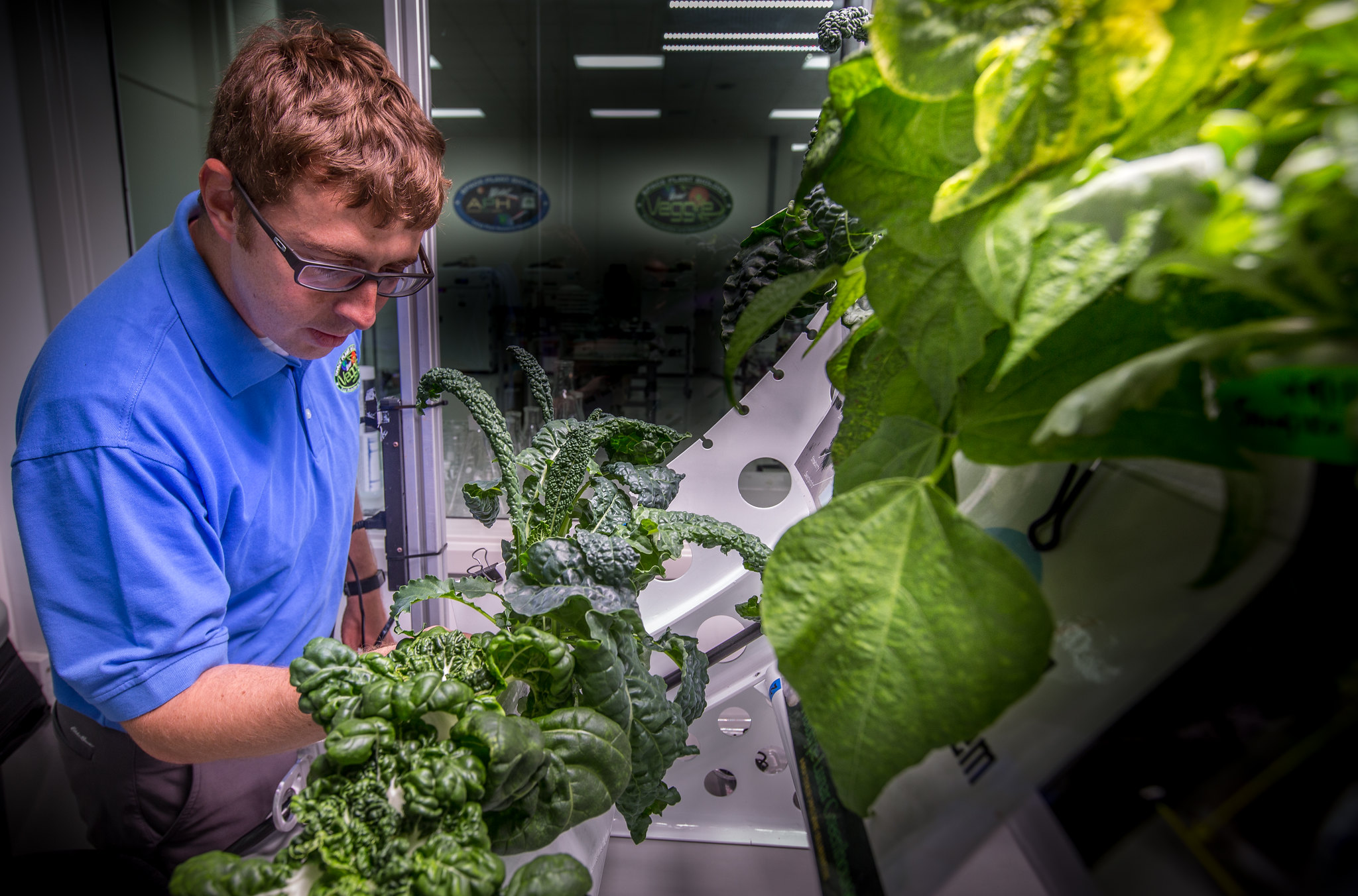
Source: NASA — Growing Plants in Space - NASA · www.nasa.gov
Trap: Space agriculture is current research, not future speculation - ISS has grown food since 2014
Don't assume it's only about Mars missions - also essential for lunar bases and long space journeys
Space plants must handle multiple stresses simultaneously - not just one factor like gravity
Flavr Savr Tomato & Shelf Life Extension
Science And Technology shelf life
Flavr Savr Tomato: First Commercial GM Crop for Shelf Life
Flavr Savr tomato (1994) was the first GM food approved for commercial sale
Extended shelf life by suppressing polygalacturonase enzyme that causes softening
Shelf life extension reduces 30-40% post-harvest losses in developing countries
Shelf life extension through genetic modification targets the enzymes that cause fruits and vegetables to ripen, soften, and decay. The Flavr Savr tomato pioneered this approach by staying firm longer while maintaining flavor.
How Shelf Life Extension Works
%%{init: {"flowchart": {"wrappingWidth": 460}}}%%
flowchart TD
  s1["`**Normal Ripening**
**Polygalacturonase enzyme** breaks down cell walls`"]
  s2["`**Genetic Modification**
Insert **antisense gene** to block enzyme production`"]
  s3["`**Extended Firmness**
Tomato stays firm **2-3 weeks longer** than normal varieties`"]
  s4["`**Commercial Benefit**
Reduced spoilage during **transport and storage**`"]
  s1 --> s2
  s2 --> s3
  s3 --> s4
GM Crops for Shelf Life Extension
Crop | Target Enzyme/Process | Benefit | Commercial Status |
|---|---|---|---|
Flavr Savr Tomato | Polygalacturonase suppression | Extended firmness | Withdrawn (1997) |
Arctic Apple | Polyphenol oxidase suppression | No browning when cut | Approved in US (2015) |
Delayed Ripening Banana | Ethylene production control | Slower ripening | Research stage |
Extended Shelf Life Papaya | Cell wall modification | Longer storage | Field trials |
India & Post-Harvest Losses
India loses ₹92,000 crore worth of food annually due to poor post-harvest handling
40% of fruits and vegetables spoil before reaching consumers
GM crops with extended shelf life could significantly reduce these losses
Alternative approaches include controlled atmosphere storage and cold chain development
Trap: Flavr Savr failed commercially despite technical success - withdrawn in 1997 due to production issues
Don't confuse shelf life extension with pest resistance - completely different genetic targets
Arctic Apple (non-browning) is different from Flavr Savr (extended firmness) - both are shelf life GM crops